Water and Wastewater Professionals Week
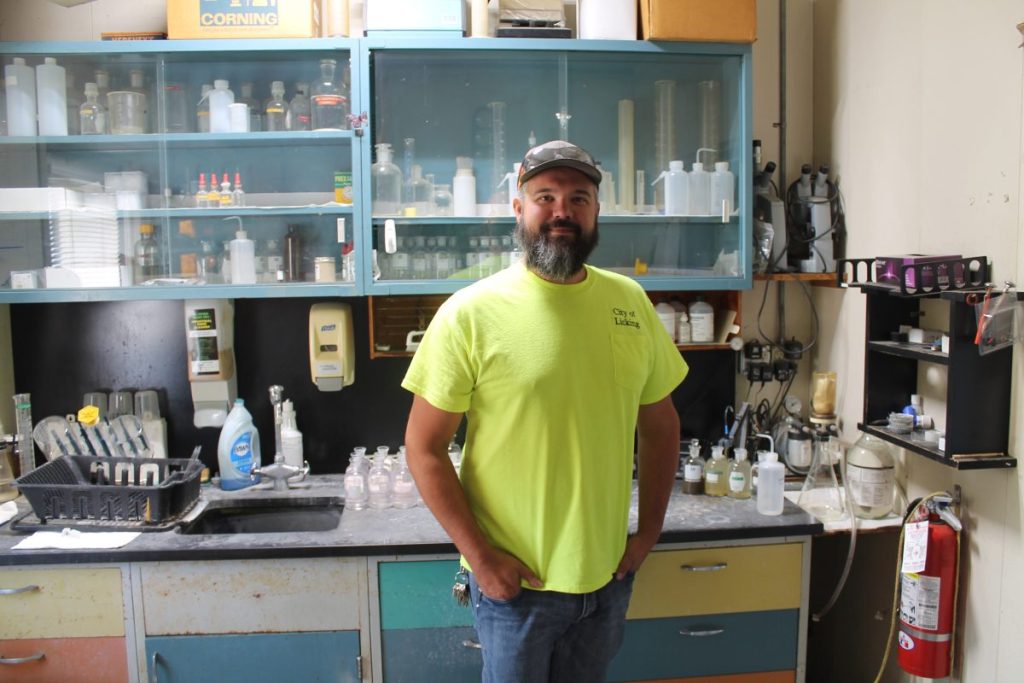
Photo by Shari Harris
The laboratory at the Wastewater Treatment Plant is an important component to keeping the plant functioning properly. Derek Hammond, shown here in the lab, says chemistry and math skills are utilized there every day.
By Shari Harris
Publisher
Governor Mike Parson declared Sept. 9-15, 2024, as Water and Wastewater Professionals Week in Missouri, signing a proclamation which recognizes water and wastewater professionals for all the vital work they do.
Derek Hammond and Chad Shepherd are the wastewater professionals for the City of Licking. They are responsible for keeping the city’s treatment plant operating. The plant runs 24/7, keeping toilets flushing and drains draining all over the community. Hammond took time out of his busy schedule to explain the workings of the plant.
Because Licking is mostly flat, over 90 percent of the sewer pipes in town drain by gravity; just a few have to be pumped. The pipe has to be laid on a grade at just the right angle so it drains, but not so steep that the liquids “outrun” the solids.
On most days, the network of sewer pipes located just under the City’s surface and from South Central Correctional Center bring about 400,000 gallons of influent into the plant. Things like heavy rains can increase the flow, and the plant can handle as much as 3.2 million gallons per day. Cracked pipes, bad joints in sewer lines, no caps on sewer cleanouts, and manholes can allow groundwater to seep into the system during heavy rains.
The purpose of the treatment plant is to clean the influent, eventually releasing clean water into the creek and removing treated sludge from the system. With 99 percent of the influent being water, most of what enters the plant is later released.
The plant is required to reduce contaminants by 70 percent before releasing the water from the plant. The Licking plant typically reduces contaminants from about 600 ppm to about 1 ppm, about 98-99 percent. Hammond said the lowest result he’s had is a 96 percent reduction.
E. coli levels are allowed to be at a daily maximum of 126, but Hammond explained that it usually is at 0 in the treatment plants affluent (what goes into the creek).
Hammond is getting ready to test for his A Wastewater Treatment Plant Operator License. The Licking plant is a B plant but is one point away from being an A plant. He is only required to have a B license currently, but he anticipates the plant could move up to an A level in the future if additional processes are added by the state. This would require an A license.
At the plant’s headworks, screens filter out large solids, like rocks, metal, fabrics, etc. The screened influent passes through to pumps that send it up to aeration basins. This is where the real work takes place. Enzymes break down biological matter. Oxygenation of the influent helps maintain methane and carbon dioxide levels. It takes about 23-½ days for a drop of water to pass completely through the plant, and much of that time is in the aeration basin. Next the influent passes through to clarifiers which slow down the movement of the water, allowing solids to settle. This aerated sludge is removed and returns to the aeration basin. The water passes through to filters which further clean the water. Finally ultraviolet light is used to treat the water, and is very successful in eliminating E.coli. Then the water is clear and ready to release into the creek.
Hammond tests samples daily and weekly to ensure the plant is operating correctly. He uses math and chemistry every day.
How can the community help with treatment plant operations? Stop water leaks, as they increase the flow into the plant. Don’t pour large amounts of chemicals into your drains, as some chemicals will affect the enzymes in the aeration basin. Businesses should keep up with grease traps and not allow them to overflow into the system. Don’t flush solids like feminine hygiene products, flushable wipes, items of clothing, or other items, as they damage pumps and seals. A pump was just replaced at the plant at a cost of $17,000.00.
The City of Licking recognizes the valuable contribution of their wastewater professionals and their water professionals this week, including Superintendent of Utilities Rodney Sullins, Assistant Superintendent of Utilities Donnie Trout, Kelsey Lane, David Hatch, Treatment Plant Manager Derek Hammond, and Chad Shepherd.
Photos by Shari Harris