Breast cancer awareness: Make it personal
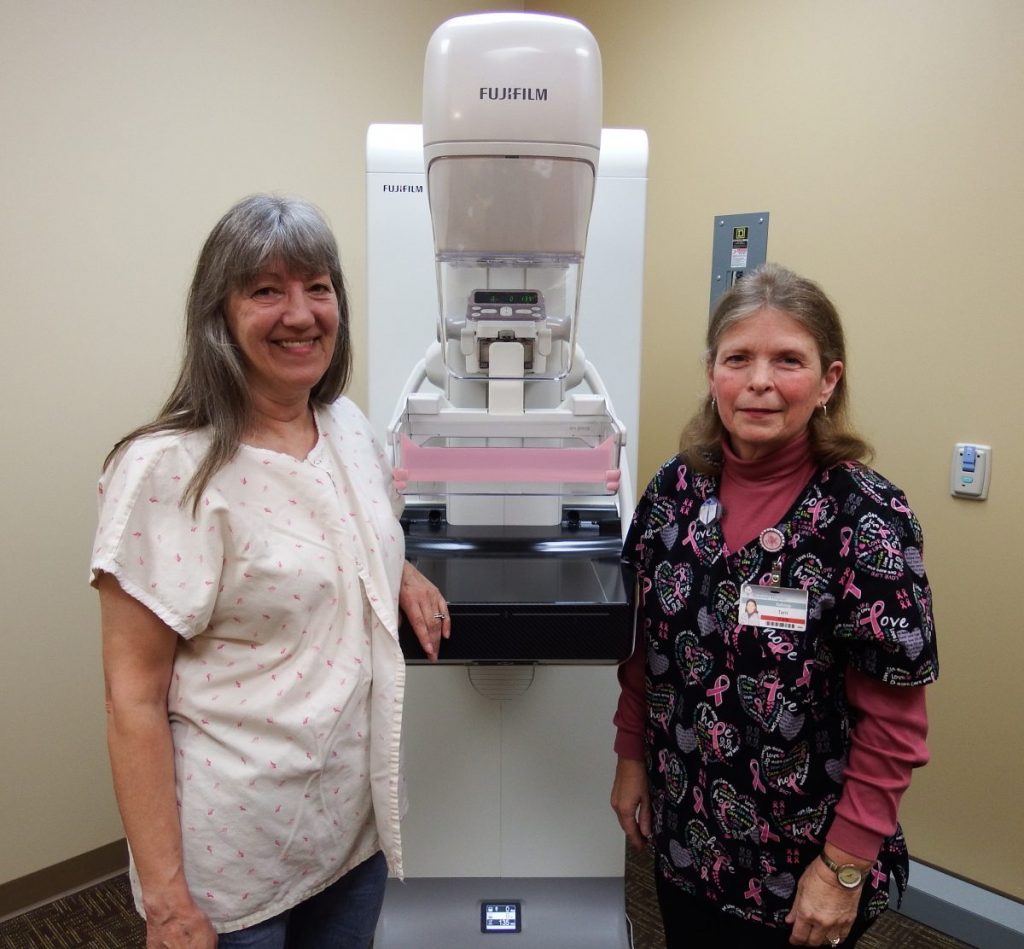
Photo by Helania Wulff
✔Annual mammogram – Terri Bailey (right) has successfully completed another patient mammogram; the completion brings smiles.
By Christy Porter, Managing Editor
I come from a family history of female breast cancer, diagnoses for those close to me, coming at an early age to an advanced age. I have seen the difference between an early diagnosis and a later, between treatments and the advancement of treatments, and the prognosis and outcome. I have seen anxiety, fear, and a sense of propriety delay action that could have changed the quality of life and the outcome of this dreaded disease. We must battle to overcome those things that would delay a diagnosis and/or choice of treatment. And men, please know that breast cancer, while not as prevalent in males, can also be a risk for you.
October is Breast Cancer Awareness Month, but breast cancer can strike at any time, even following an examination and mammogram, and before what would be a next scheduled appointment. Early detection is the key, so an annual clinical breast exam done by your healthcare provider, ongoing self-examination, and when recommended, a baseline and regularly scheduled mammogram are important.
Texas County Memorial Hospital (TCMH) has registered, qualified and experienced technologists who participate in continuing education and are also sensitive to any anxiety, fear, or propriety concerns that you may have regarding a breast mammogram.
Terri Bailey, a quality control mammography technologist with TCMH, is one of four qualified, experienced and registered technologists. Bailey has 36-years of experience and has seen the evolution and advancement in technology that is of great benefit to her patients and health care providers. The department also includes Shannon Bridges with 28-years, Kristy Weaver with 22-years and Lori Dailing with 21-years of experience.
“I experience patients who, even while scheduling a mammogram, show anxiety. Oftentimes that anxiety is still present when having the test,” shared Bailey.
The anxiety can begin prior to scheduling a mammogram, being fearful of the “what ifs,” fearful of any discomfort or pain, fearful of the results, or a discomfort of allowing exposure to a part of your body that is normally intimate and personal. Please discuss these concerns with your healthcare provider or the radiology department personnel, as suggestions can be made to minimize any discomfort.
If you did not have a breast cancer check-up in the past year, please schedule one now. Being proactive in having a mammogram is extremely important.
“Finding cancer earlier has changed with women receiving a yearly exam,” said Bailey. “Please don’t let anxiety of the procedure itself or the results keep you from getting it done.”
She acknowledges that the recommendations for annual or bi-annual screenings vary and may be based on personal criteria. Generally annual screenings are recommended beginning at the age of 40 for average risk persons with no family history of breast cancer, and ages 35 – 40 for those who may be at higher risk.
Questions that your health care provider may ask, as well as a questionnaire that is provided prior to the test may include your family history, including the occurrence of breast cancer in immediate and/or extended biological family.
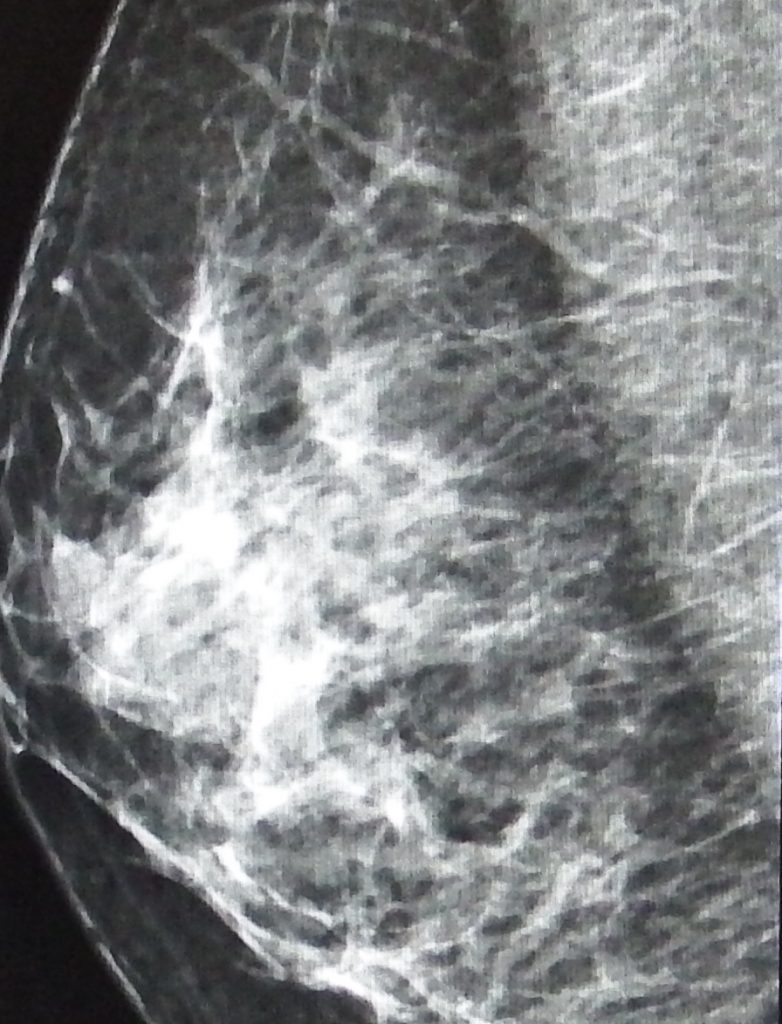
Photo submitted
This imaging shows the increased breast density that could make the detection of breast cancer more challenging or possibly increase the risk of breast cancer.
During a mammogram procedure there may be some discomfort due to compression. The compression provides a better image quality, separates the tissue and reduces the amount of radiation exposure. The exceptional accuracy of the new 3D mammography results in a better detection rate and possibly decreases the need for additional procedures.
Your radiologist will go to the side of caution when evaluating during and following the test; this may result in additional pictures being taken. Remember, they are being proactive and cautious. If something is detected in the images from the mammogram that cannot be more easily identified, such as a cyst, you will receive a call back. To alleviate any concern, an additional mammogram, ultrasound imaging or a biopsy may be ordered. Biopsies will define if a mass contains non-malignant or malignant tissue; not all cancers look the same. Then recommended treatment will be initiated.
Breast cancer has been noted to be a higher risk in women who have not ever been pregnant, have a family history of a younger age diagnosis, and have dense breast tissue.
Risk is reportedly reduced for women who experienced the onset of their menstrual cycle later in puberty, their menstrual cycle ceased earlier in life, or who breastfed their child.
Self-examination: Pick a date; the day date of your birth may be easy to remember, and on that date EVERY month do a self-examination. If you are unsure how to do that, information is available on several websites and your health care provider can also provide you with information. Women should become familiar with their breasts, how they look and feel. If any changes are noticed they should contact their health care provider immediately. As breast cancer becomes more prevalent in women at a younger age, self-examination should begin at an earlier age.
Men should also be observant and contact their health care provider if changes to their chests are noted.
Bailey emphasized, “Get started with your exams and then stay with it; consistency with your exams can make the difference!”
TCMH is a certified mammography site offering 3D tomosynthesis mammography and has a “zero deficiency” rating from the Mammogram Quality Standards Act (MQSA) for mammography done by their experienced radiology department for the 26th straight year.
And while not medical advice, if you experience anxiety in regards to a mammogram, have the support of a friend for your appointment, and then make it a “girls” day and enjoy a luncheon or coffee date before or after.