SCCC participates in MPTP to transform prison environment
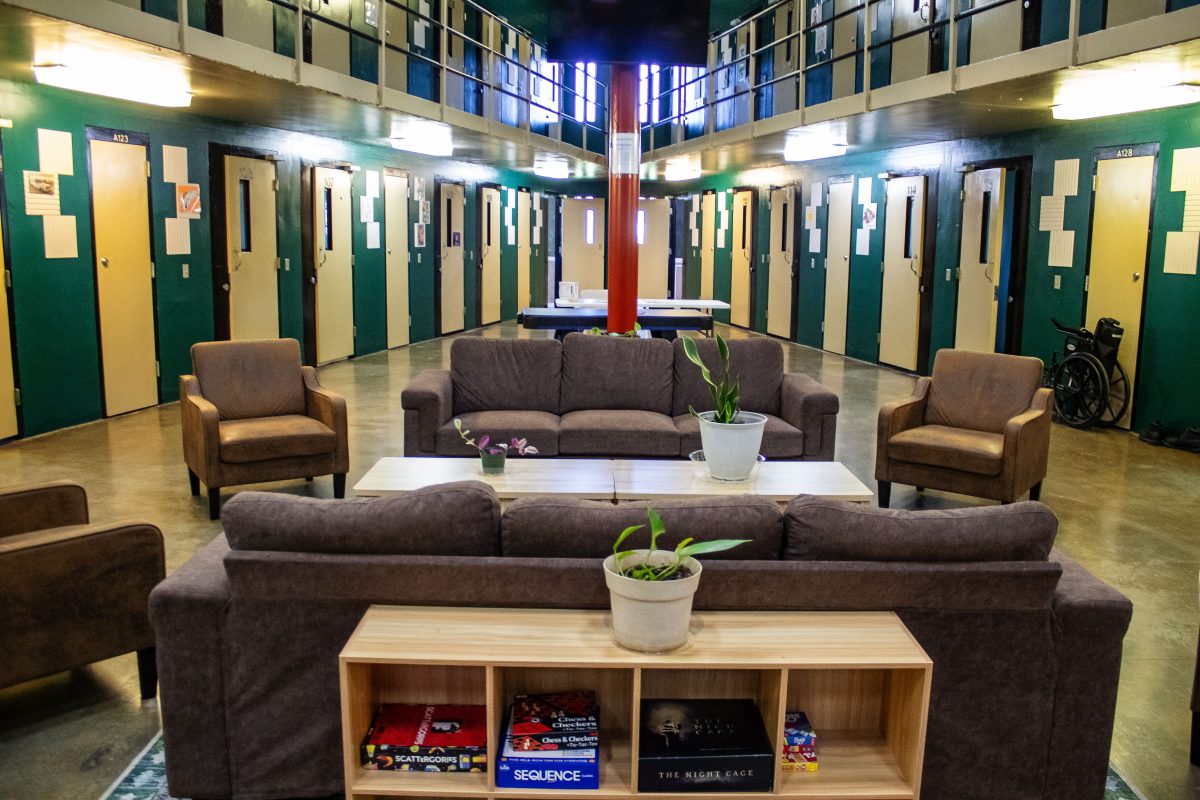
Photo by Katey Wesley
Couches, plants, games and puzzles contribute to a more relaxed atmosphere on the wings.
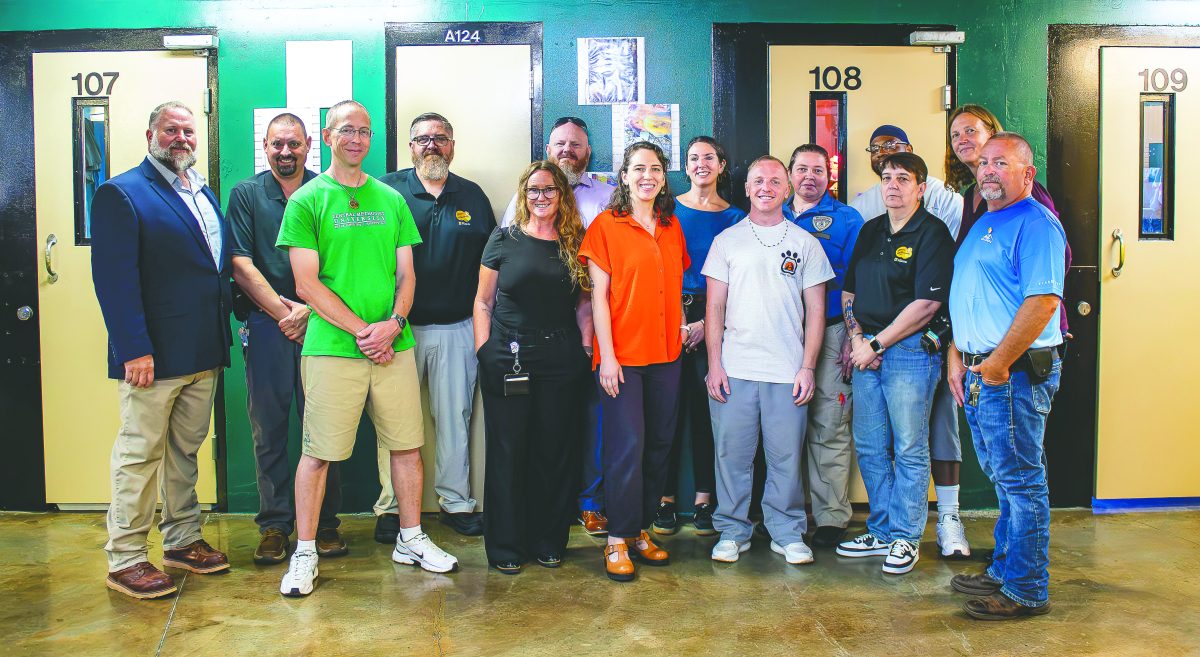
Photo by Katey Wesley
Front row, from left, resident Jason Buddemeyer, Dana Cafourek, DOC project manager; Kate Maley, LCSW, MU Project Coordinator; resident Benjamin Daniel; Maryann Phillippe, Case Manager; Jeremy Roach, Functional Unit Manager; back row: Asst. Warden Troy Wade; Brett Matzenbacher, Case Manager; Dep. Warden Derek Dawson; Warden Michael Shewmaker; Kelli Canada, PhD, LCSW, member of MU research team; Capt. Pam Lewis; resident Thailand Thomas; and Beth Huebner, PhD, member of MU research team. Residents Buddemeyer and Daniel did much of the artwork on the wings.
South Central Correctional Center (SCCC) hosted a grand opening of the Missouri Prison Transformation Project (MPTP), which is taking place at their facility over the next few years, on Wednesday, July 8.
The MPTP is a five-year study by the MU School of Social Work in partnership with the Missouri Department of Corrections (DOC), that seeks to improve the quality of life and wellbeing of those living in, working in, and recently released from prison. Arnold Ventures is funding the program with a grant, which allowed transformation of two wings in Housing Unit 6 at SCCC. In addition to changing the physical environment, the program also seeks to change the cultural environment.
Three core concepts are utilized in the program: normalcy, humanistic psychology and dynamic security. Normalcy refers to making the prison as similar as possible to the outside world. Humanistic psychology emphasizes empathy, the whole person and individuality. Dynamic security refers to building safety through rapport-building and a focus on rehabilitation.
Physical changes to the wings include reducing cell occupancy on one wing to single-man cells. A kitchenette and barber shop have been added to one wing, and two decompression rooms are located on the other wing. Sound dampening panels reduce noise on the wings. Residents of the wings currently have to check in to pass from one wing to the other, but the plan is to eventually open access to either wing. Couches, small tables and chairs, a ping pong table, a large checkerboard and puzzles are available to residents. These items, along with painted accent walls in cells, Hibachi House decorations in the kitchenette, Kung Fu Haircuts designs in the barbershop, and a peaceful river in one decompression room and night sky in the other decompression room are intended to change the culture of the wings, making them more comfortable and communal.
Housing Unit 6 already contained honor dorms, rewarding offenders who have demonstrated pro-social behaviors. One wing in the unit houses the Puppies for Parole, which is currently being painted to resemble a park scene. However, unlike the traditional honor dorms, MPTP uses a lottery system to choose their participants, with MU researchers drawing the names. They want to see what effect the changes will have on the offenders. Offenders facing life sentences to those up for imminent parole can be entered into the lottery. Using both a single-man cell wing and a two-man cell wing in the study will help establish if the same effects can be seen on the two-man cell wing. If so, more offenders could potentially participate in the program in the future, simply based on physical space.
The study began last spring at Moberly Correctional Center and Women’s Eastern Reception, Diagnostic & Correctional Center in Vandalia. Farmington Correctional Center is also opening wings this summer. SCCC is the only Level 5 center in the study. The researchers are gathering data on numerous aspects of the program, including offender behaviors and incidents, and even sound levels on the wings. SCCC staff acknowledged the sound level, despite the added excitement of an Open House, was noticeably quieter on the wings.
The wings still have security checks. Staff are trained on empathetic communication, humanizing language, and professional rapport building. Contact staff speak with offenders every day to make sure everything is going well. Also part of the program are self-improvement activities designed to pursue individual goals and building skills such as budgeting, meal preparation, professional skills and formal education; community building activities to enhance connections with other residents and with family; and re-entry planning to support connection with the broader community.
Anticipated outcomes of the program include fewer conduct issues, lower recidivism rates, fewer grievances about staff, a perceived improvement of prison culture and climate, improved health and quality of life, and better staff job satisfaction and health.
SCCC administration is excited about the change they have already seen in the environment on the wings, noting a more relaxed atmosphere, and is hopeful to see all the anticipated outcomes come to fruition.
Photos by Katey Wesley